


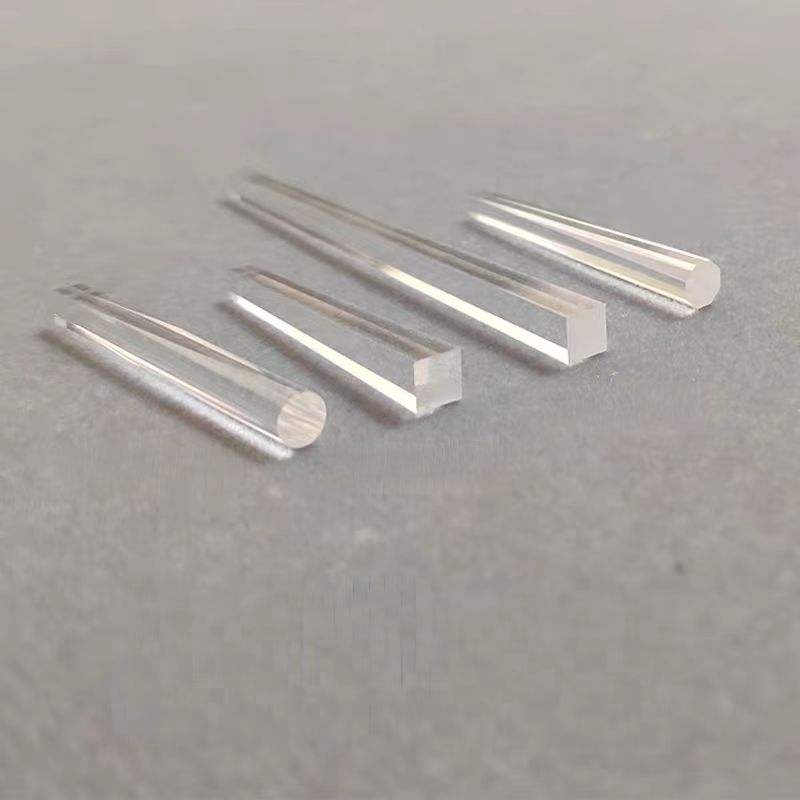
Optical glass light guide rods are precision optical components designed to transmit, homogenize, and shape light through total internal reflection, ensuring high efficiency and uniform illumination in optical systems.
Made from High-Purity Optical Glass with Excellent Transmission.
Polished Surfaces for Efficient Light Coupling and Minimal Loss.
Customizable Diameters, Lengths, and End Configurations.
Optional AR Coating for Enhanced Performance in Specific Wavelengths.
Optical glass light guide rods are long, thin optical parts that transmit light via total internal reflection. They efficiently send incoming light to a target spot. Here’s what makes them useful:
Efficient light transmission, low loss: With high transmittance (≥92% for visible light) and total internal reflection, they pass 85%-95% of light—way better than regular plastic guides. Good for long-distance transmission (up to 1 meter).
Flexible structure, wide use: Comes in round, square, or custom shapes. Diameter/side length ranges from 1mm to 50mm. You can design their length and shape to fit device space, easily fitting into compact optical systems.
Tough against the environment: Made of hard optical glass (like BK7 or fused silica), they handle high/low temps (-40℃~+120℃) and UV aging. Transmittance drops by less than 5% per year with long use—more durable than plastic guides.
Even light output: Some have tiny surface structures that turn uneven incoming light into even outgoing light. No extra parts needed to make light even, simplifying system design.
How to Choose One
Pick material for light needs: Use BK7 glass for regular lighting (cheap). For UV tests or high-temp areas (like near industrial furnaces), choose fused silica. For hard, scratch-resistant needs (like medical tools), pick sapphire.
Match size to device space: Choose cross-section size (leave 0.5-1mm gap) and length based on where it’ll be installed. For micro sensors, go for round rods ≤1mm in diameter.
Optical specs depend on use: For long-distance transmission (>300mm), pick high-efficiency ones (≥90%). For lighting, focus on even output (≥85%). For UV/infrared use, make sure the transmittance range covers your target light.
Adapt to environment: For humid areas (like medical devices), get ones with anti-fog coatings. For vibrating scenes (like cars), choose rods with reinforced ends. For high temps, skip regular glass—go for quartz.
Balance cost and quantity: Regular specs (like BK7 round rods) are cheap in bulk. Custom or high-precision ones need to be made to order—check if mass production is feasible before ordering in large quantities.


 Send Email
 售前客服
售前客服 Skype
Skype