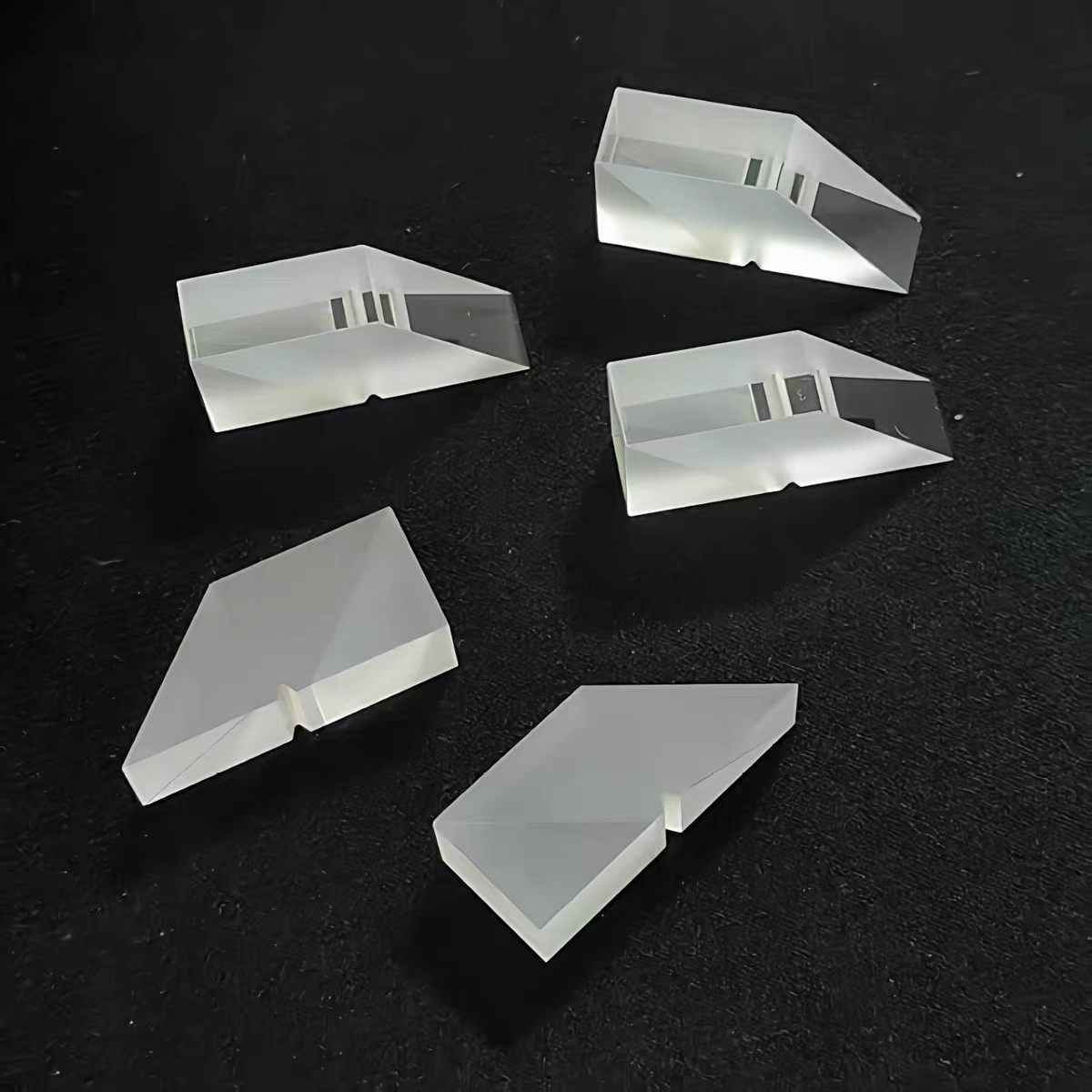
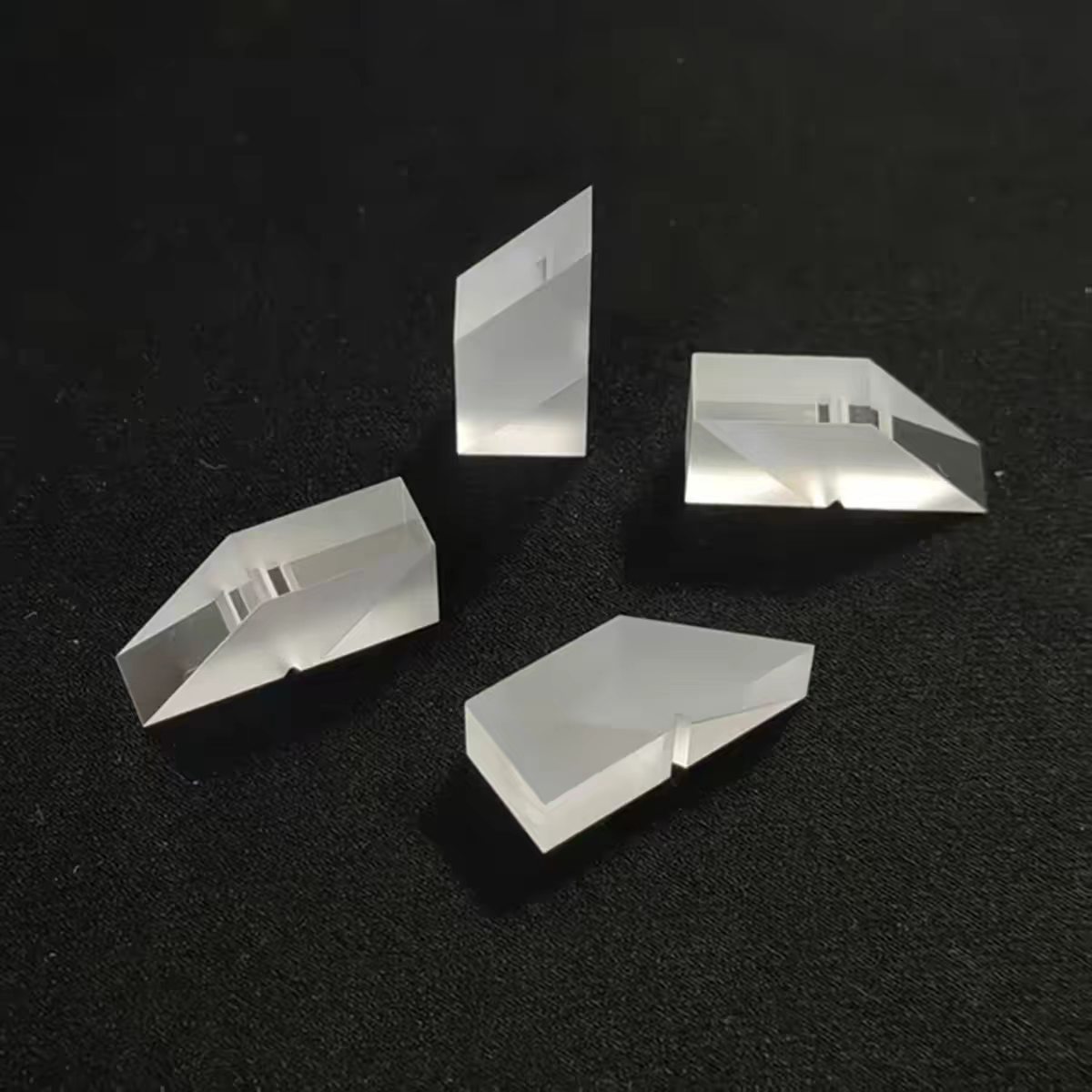
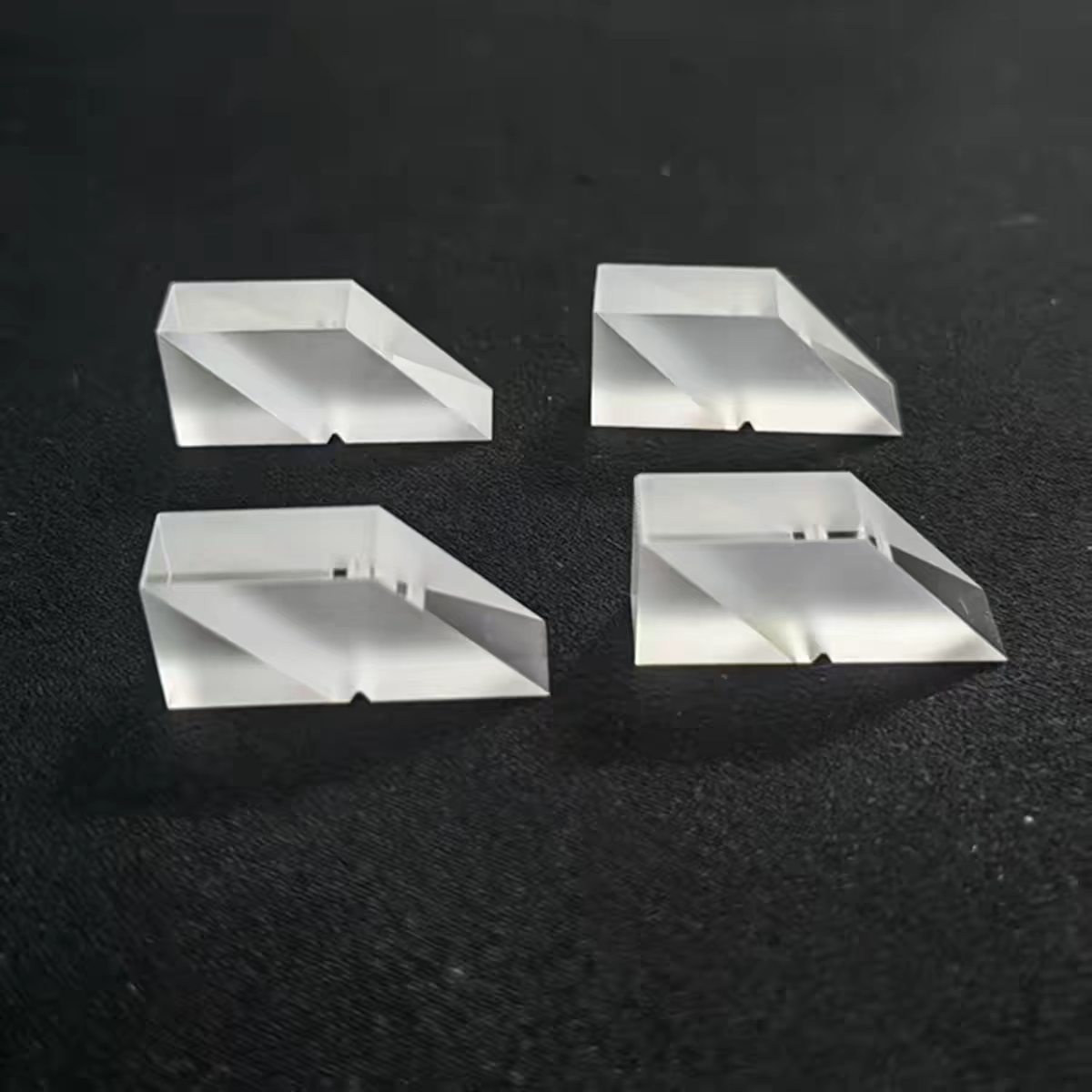
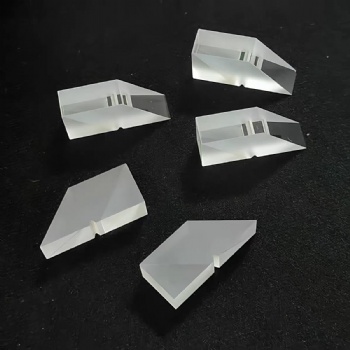
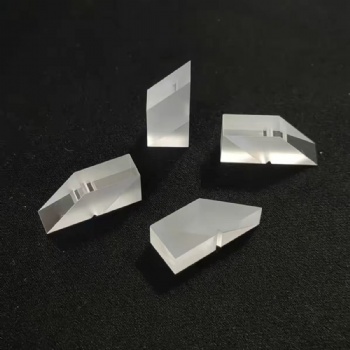
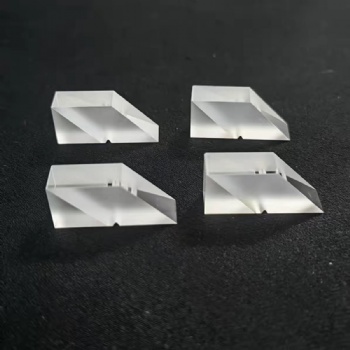
Rhomboid Prisms are precision optical components designed for lateral beam displacement while maintaining the original beam direction. The parallel entrance and exit faces allow light to be shifted without changing the image orientation.
They are commonly used in laser systems, optical alignment assemblies, imaging instruments and precision measurement equipment requiring controlled beam displacement. Unlike Dove prisms, rhomboid prisms do not rotate or invert the image.
Rhomboid prisms are used in various optical applications where the precise control of light is required. They are often used in combination with other optical elements in instruments such as spectrometers, telescopes, and cameras. The unique shape of the rhomboid prism allows it to displace the path of a light beam by a certain angle, which can be useful for adjusting the alignment of an optical system
| Material | optical glass/BK7/K9/UV fused silica |
| Dimension | 0.75-200mm |
| Dimensional Tolerance | ±0.01mm |
| Angle Tolerance | ±3' |
| Surface Flatness | 1/4Lambda |
| Effective aperture | >90% |
| Surface Quality | 60/40, 40/20 20/10 or better |
| Bevel | 0.1-0.3mmx45° |
Can be customized according to your requirements
spherical lens,plano-convex,plano concave lens,cylindrical lens,ball lens,halfball lens,optical windows,prism,optical filters.If you have any requirement,please contact us
Tags: spherical lens , plano-convex , plano concave lens , meniscus lens,cylindrical lens , ball lens , halfball lens , optical windows , prism , semi-circular prism , optical filters


 Send Email
 售前客服
售前客服 Skype
Skype