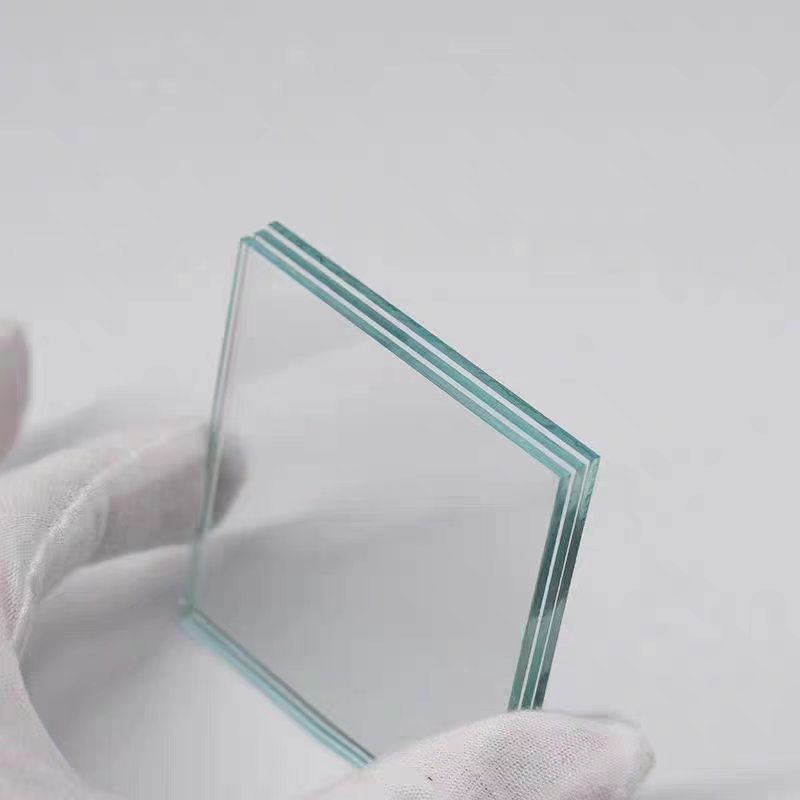
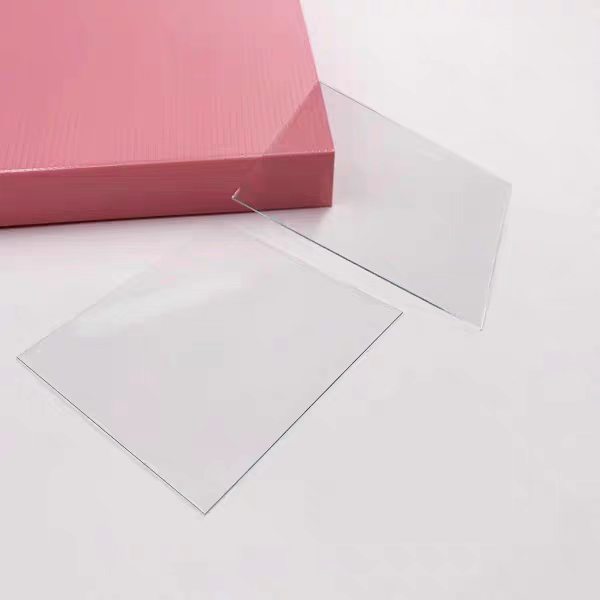
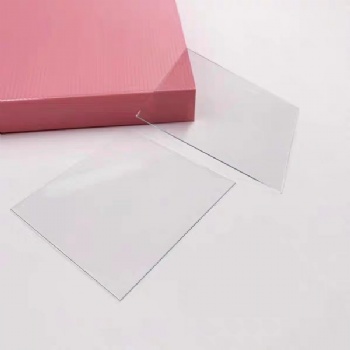
Tempered or toughened glass is a type of safety glass processed by controlled thermal or chemical treatments to increase its strength compared with normal glass. Tempered glass is about four times stronger than annealed glass.
Tempering puts the outer surfaces into compression and the interior into tension. Such stresses cause the glass, when broken, to shatter into small granular chunks instead of splintering into large jagged shards as ordinary annealed glass does. These smaller, granular chunks are less likely to cause deep penetration when forced into the surface of an object (e.g. by gravity, by wind, by falling onto them, etc.) compared to larger, jagged shards because the reduction in both the mass and the maximum dimension of a glass fragment corresponds with a reduction in both the momentum and the penetration depth of the glass fragment.
The surface is smooth and flat, the edges are smooth and the item can be customized.
| Material | optical glass,BK7 ,Fused silica, JGS1,JGS2,JGS3,Low iron glass,soda lime glass,borofloat 33(BF33) |
| Diameter | 1-500mm |
| Thickness | 0.1-50mm |
| Diameter Tolerance | ±0.01 mm |
| Thickness Tolerance | ±0.01mm |
| Surface Quality | 80/50,60/40,40/20,20/10 |
| Clear Aperture | >90% |
| parallelism | <3 arcmin |
| Coating | Custom |
| Bevel | 0.1~0.3mm x 45 degree |
He Rui Optics produces a variety of precision optical components with experienced engineers and advanced equipment.We can produce standard and customized optical lens,mirror,filter,prism,windows,crystal,wafers.If you have any requirement,please contact us
Tags: Optical Lenses Optical windows Optical Prisms Optical filters Optical Mirrors Optical Crystals Silicon Wafers Silicon lens cylindrical lenses laser optics infrared optics uv optics


 Send Email
 售前客服
售前客服 Skype
Skype