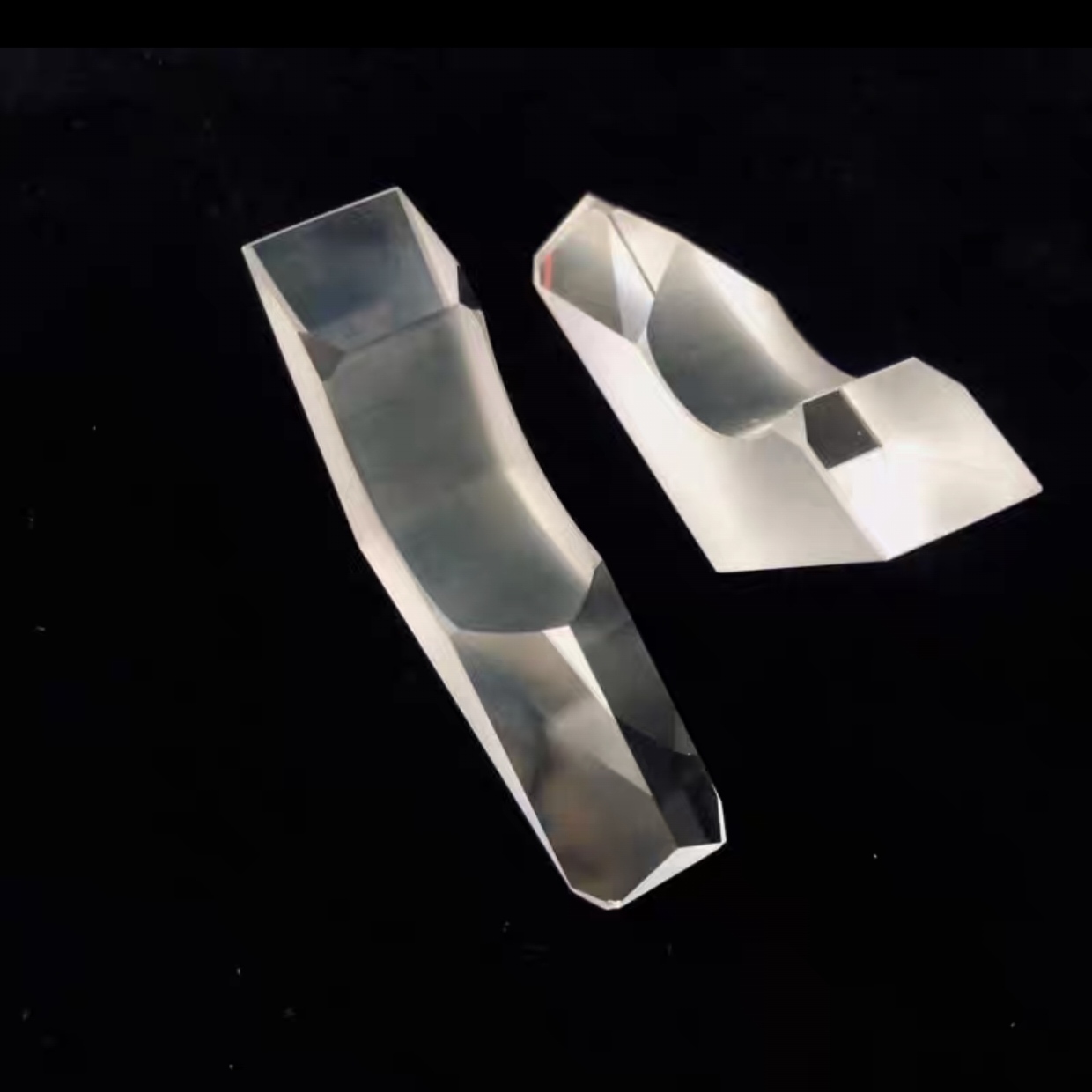
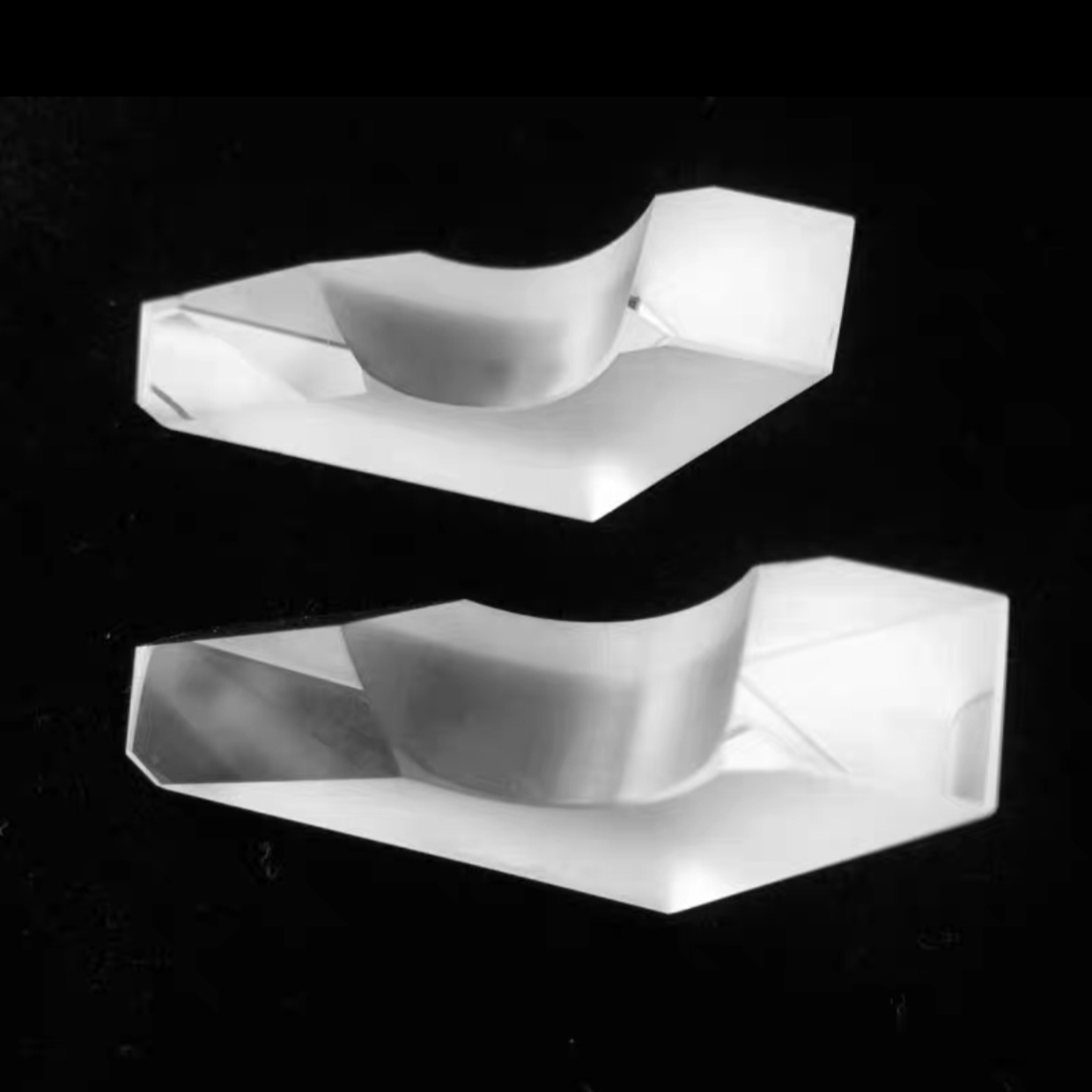
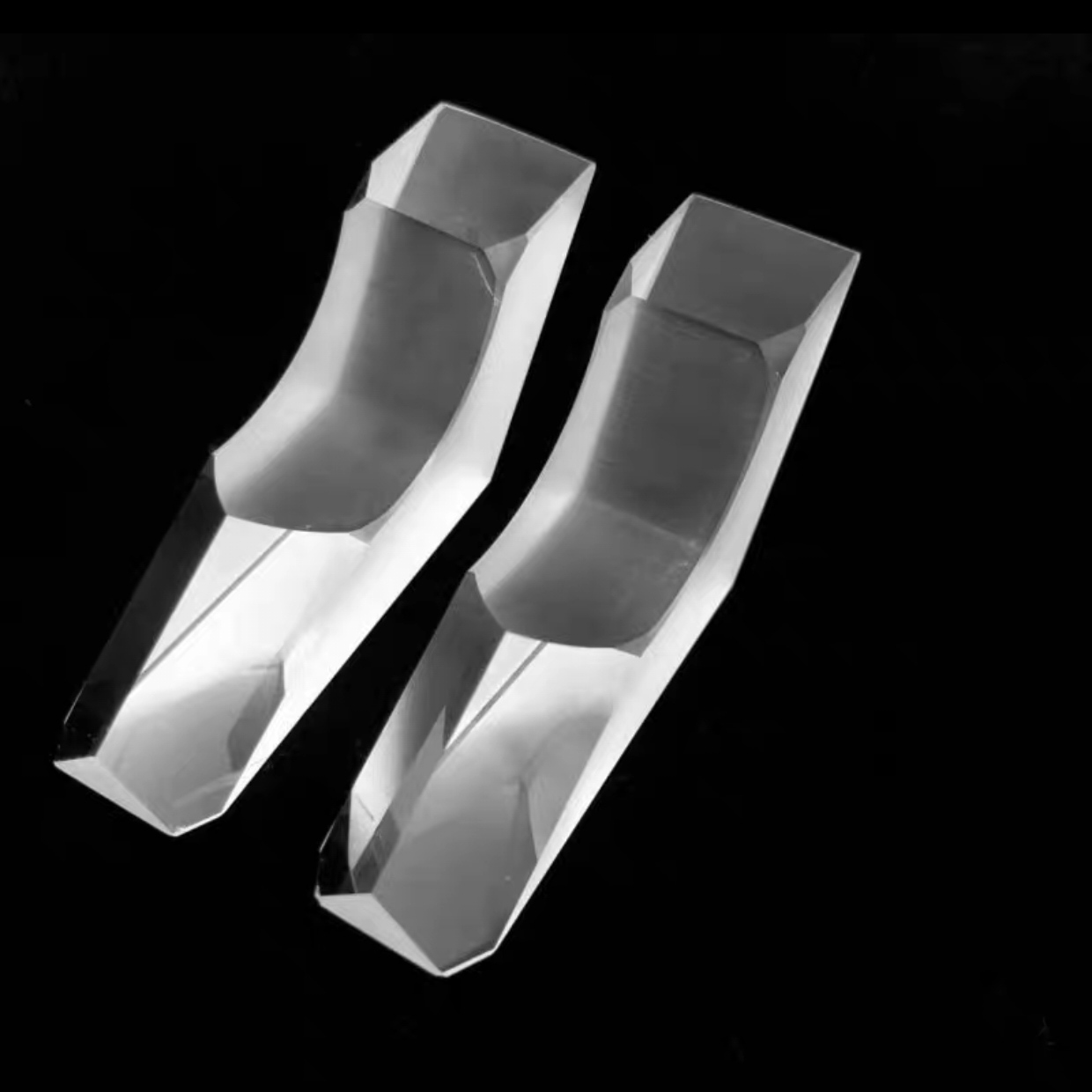
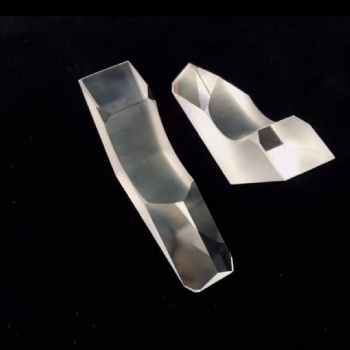
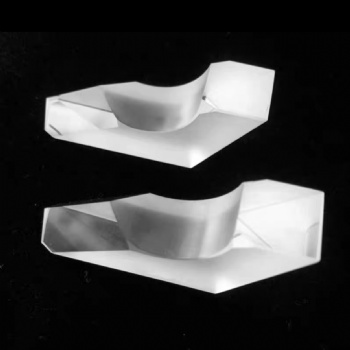
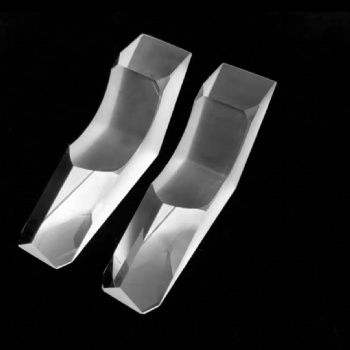
The Lehmann Prism, also spelled Leman Prism or Sprenger-Leman Prism, is a type of roof prism used as an image-erecting and beam-folding system.
It is most commonly used in binoculars and periscopic instruments because it provides a large lateral offset of the optical axis in a compact form.
The Lehmann prism can be regarded as a compound prism consisting of a roof section combined with reflecting faces:
Light enters through the entrance face, undergoes multiple total internal reflections (typically 4 reflections, including two on the roof faces) inside the prism.
The roof edge splits the beam into two halves and recombines them, which corrects left-right reversal.
The beam exits parallel to the incident beam but with a significant lateral displacement (offset).
The Lehmann prism can be regarded as a compound prism consisting of a roof section combined with reflecting faces:
Incident beam and emergent beam are parallel but offset.
Image is rotated by 180°, i.e. inverted both top-to-bottom and left-to-right.
When used in a complete erecting system, it produces a fully erect, correctly oriented image for observation.
Features
Large axis offset: Ideal for wide-body binoculars, increasing stereoscopic effect.
Compact erecting system: Folds a long optical path into a short physical length.
No coating required in principle: Works by total internal reflection (TIR), with AR coating on entrance/exit faces to improve transmission. Reflective / metallic coating optional for special wavelengths.
High precision requirement: Roof angle tolerance is critical, typically < 3 arcsec, roof edge must be sharp and chip-free to avoid double images and stray light.
Material: Optical glass N-BK7 / H-K9L, Fused Silica / Quartz for UV
Dimensions: 10 - 50 mm standard, up to 300 mm customizable
Dimensional Tolerance: ±0.05 mm
Roof Angle Tolerance: < 3''
Surface Flatness: λ/10 @ 633nm
Surface Quality: 40-20 scratch-dig
Coating: AR, BBAR, Aluminum / Silver as required
Can be customized according to your requirements
spherical lens,plano-convex,plano concave lens,cylindrical lens,ball lens,halfball lens,optical windows,prism,optical filters.If you have any requirement,please contact us
Tags: spherical lens , plano-convex , plano concave lens , meniscus lens,cylindrical lens , ball lens , halfball lens , optical windows , prism , semi-circular prism , optical filters


 Send Email
 售前客服
 Skype